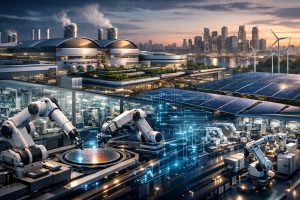
As China advances toward its next economic era, its labor market finds itself at the crossroads of two profound forces: rapid technological transformation and demographic decline. The World Economic Forum’s recent article, “The Future of Jobs in China: The Rise of Robotics and Demographic Decline Are Opening Up Skills Gaps,” explores how these forces are reshaping the country’s employment landscape, creating both new opportunities and urgent challenges.
China is now the world’s dominant player in industrial robotics, deploying more than half of the world’s robots within its borders. This shift is not merely a pursuit of efficiency—it’s a strategic response to a shrinking working-age population. With fewer people available to work, companies are turning to automation to maintain productivity and global competitiveness. Beyond the factory floor, China is embracing innovation in renewable energy, electric vehicles, and frontier technologies like quantum computing and artificial intelligence (AI).
While this technological surge is remarkable, it has also magnified a pressing issue: the widening skills gap. Although 38% of Chinese employers report challenges in finding qualified talent, they remain more optimistic than their global counterparts. This confidence stems from China’s national push for workforce upskilling, embedded in its 14th Five-Year Plan. The government’s strong emphasis on technical education and reskilling initiatives aims to build a high-quality workforce capable of operating in advanced industries.
However, China’s demographic trajectory complicates this mission. The country’s aging population and declining birth rates are creating structural labor shortages, especially in sectors requiring physical presence or specialized training. In response, companies must adopt a dual strategy: ramping up automation while also investing in talent development to ensure a sustainable labor pipeline.
At the same time, green transformation is emerging as a key pillar of economic growth. With strong government and corporate focus on environmental sustainability, roles related to climate action, big data analytics, and machine learning are expected to grow significantly. China’s companies are leading the global charge in recognizing environmental issues as critical to business transformation, further accelerating the demand for skilled talent in these fields.
China’s future of work is being defined by its capacity to balance technology with talent. Robotics and AI may fill some gaps, but a resilient and skilled workforce remains essential to long-term economic vitality. As the country adapts to these evolving forces, its experience offers valuable lessons for other economies confronting similar challenges.